Turbochargers are one of the most fascinating pieces of automotive engineering, yet many people still struggle to visualize what actually happens inside one. That is why searches for this have become so popular. An animation makes it much easier to understand how exhaust gases spin a turbine, how that turbine drives a compressor, and how compressed air helps an engine make more power. In this guide, we will break down every major part of the process in clear language. If you have ever watched a it video and wanted a deeper explanation, this article will help connect the visuals to the real mechanical principles behind turbocharging.
Table of Contents
- What a Turbocharger Does and Why Animations Help
- Main Parts of a Turbocharger Explained Step by Step
- Turbine Housing and Turbine Wheel
- Shaft
- Compressor Housing and Compressor Wheel
- Bearings and Lubrication
- Wastegate
- Intercooler
- How Exhaust Energy Becomes Boost Pressure
- Common Turbocharger Components Seen in Animation Videos
- Exhaust Manifold
- Air Intake and Filter
- Compressor Outlet Piping
- Intercooler Piping
- Blow-Off Valve or Diverter Valve
- Wastegate Actuator
- Engine Control Unit
- Benefits, Drawbacks, and What Animations Often Simplify
- Benefits of Turbochargers
- Drawbacks of Turbochargers
- What Animations Simplify
- FAQ
- What is the easiest way to understand how do turbochargers work animation?
- Why do people search for how do turbochargers work animation instead of diagrams?
- Does a how do turbochargers work animation show real engine conditions?
- Can how do turbochargers work animation help beginners learn faster?
- What should I look for in a good how do turbochargers work animation?
- Conclusion
What a Turbocharger Does and Why Animations Help
If you have searched for these, you are probably trying to understand the relationship between airflow, exhaust flow, and engine power. At its core, a turbocharger is an air pump that uses exhaust energy to force more air into the engine than the engine could draw in naturally.
In a naturally aspirated engine, the pistons pull air into the cylinders using atmospheric pressure alone. That works well, but it limits how much oxygen can enter the combustion chamber. A turbocharger solves that problem by compressing incoming air. More oxygen in the cylinders means more fuel can be burned, which increases power.
A good they usually shows two sides of the turbo:
– The turbine side
– The compressor side
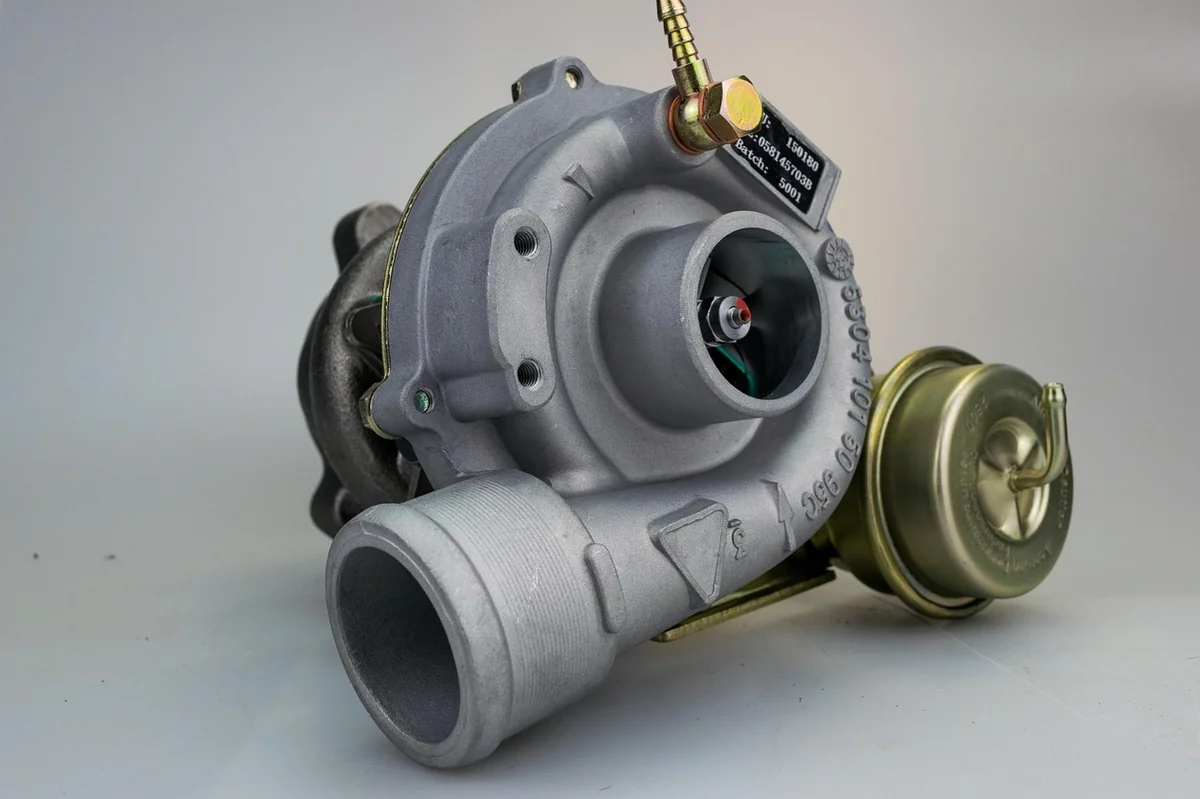
These two sides are connected by a shaft. Exhaust gases leave the engine and hit the turbine wheel, causing it to spin. That spinning shaft then turns the compressor wheel on the intake side. As the compressor spins, it draws in fresh air, compresses it, and sends it into the engine.
Animations are especially useful because the movement is too fast and too enclosed to observe directly in a real engine. A well-made the concept can show cutaway views, airflow paths, pressure changes, and the role of each component. Instead of guessing what happens inside the housing, you can watch the turbine and compressor interact frame by frame.
This is important because turbocharging is not just about “more air equals more power.” It also involves heat, pressure, efficiency, and control systems. Animations simplify these invisible processes so viewers can grasp concepts like boost pressure, lag, and wastegate operation much faster than by reading technical diagrams alone.
Main Parts of a Turbocharger Explained Step by Step

To fully understand the approach, you need to know the major parts involved. Most animations break the system into individual components so viewers can see how they work together.
Turbine Housing and Turbine Wheel
The turbine housing sits on the exhaust side of the turbocharger. Exhaust gases from the engine are directed into this housing. Inside it is the turbine wheel, which looks somewhat like a small fan or impeller. As hot exhaust gas flows across the blades, it makes the turbine spin at extremely high speeds, often exceeding 100,000 RPM.
This is the first key lesson in it content: the turbo does not run from the crankshaft directly. It is powered by energy that would otherwise be wasted through the exhaust.
Shaft
The turbine wheel is connected to the compressor wheel by a central shaft. When the turbine spins, the shaft spins too. This transfers rotational energy from the exhaust side to the intake side.
Animations often highlight this shaft because it is the bridge between waste exhaust energy and useful intake compression.
Compressor Housing and Compressor Wheel
On the other side of the turbo is the compressor housing. The compressor wheel draws in outside air, accelerates it, and compresses it before sending it toward the intake manifold.
When people watch a this, this is often the moment where the process becomes clear. You can see that the exhaust and intake sides never mix directly. Instead, the exhaust spins the turbine, and the shaft transfers that motion to the compressor, which handles fresh intake air separately.
Bearings and Lubrication
Turbochargers spin at extremely high speeds, so they require excellent lubrication. Oil flows through the center housing to cool and lubricate the bearings. Some turbochargers also use coolant passages for temperature control.
An accurate these may also show oil flow because lubrication is critical to durability. Without it, the shaft and bearings would quickly fail under extreme heat and rotational speed.
Wastegate
The wastegate controls boost pressure by diverting some exhaust gas away from the turbine. If all exhaust always hit the turbine, boost could rise too high and damage the engine. The wastegate opens when a target boost level is reached, limiting turbo speed.
This is one of the most important control elements shown in they materials because it demonstrates that turbo systems need regulation, not just raw airflow.
Intercooler
Compressed air gets hot. Hot air is less dense than cool air, so engines benefit from cooling that compressed intake air before it reaches the cylinders. The intercooler helps reduce air temperature, increasing density and improving efficiency.
Many animated explainers include the intercooler because it connects turbocharging to real-world performance and reliability.
How Exhaust Energy Becomes Boost Pressure
A central reason people look up the concept is to understand how exhaust gas can produce intake boost. This transformation is the heart of turbocharging.
The process starts after combustion. When fuel burns inside the engine cylinders, it creates expanding gases that push the pistons down. Once that energy has done its main work, the exhaust gases exit the cylinder and move into the exhaust manifold. Instead of letting that energy disappear unused, the turbocharger captures part of it.
The exhaust gas enters the turbine housing and strikes the turbine blades. This causes the turbine wheel to rotate rapidly. Because the turbine is attached to the compressor by a shaft, the compressor wheel spins at the same time. The compressor then pulls in fresh air from the air filter and compresses it.
That compressed air moves through the intake piping, often through an intercooler, and then into the intake manifold. From there, it enters the cylinders during the intake stroke. Since the air is denser, each cylinder receives more oxygen than it would under normal atmospheric pressure. The engine can then inject more fuel, producing a stronger combustion event and more power.
A clear the approach often illustrates boost pressure as a buildup of compressed air in the intake tract. This visual makes it easier to understand that boost is simply pressure above atmospheric level. For example, if atmospheric pressure is around 14.7 psi at sea level and the turbo adds 10 psi of boost, the engine is receiving significantly more air mass than it would without turbocharging.
This is why smaller turbocharged engines can often produce power levels similar to larger naturally aspirated engines. They are effectively packing more air into the combustion chamber.
However, the system is not perfectly linear. Turbo performance depends on engine speed, exhaust flow, turbine size, compressor efficiency, and control strategy. A detailed it may also show that boost usually rises with load and RPM rather than appearing instantly at all times.
This is also where the concept of turbo lag comes in. Because the turbo relies on exhaust flow, it takes a moment for the turbine to spool up when you press the accelerator. Larger turbos generally take longer to build boost, while smaller turbos spool faster but may have lower peak airflow capacity.
In practical terms, boost pressure is the result of converting exhaust energy into rotational speed and then into compressed intake air. Animations are powerful teaching tools because they make these otherwise invisible changes in pressure and velocity much easier to follow.
Common Turbocharger Components Seen in Animation Videos
When viewers search this, they are often trying to decode the symbols, arrows, and moving parts in educational videos. Understanding the common elements featured in those animations can help you get more value from what you watch.

Exhaust Manifold
The exhaust manifold collects exhaust gases from each cylinder and directs them toward the turbocharger. In animations, it is usually shown as the entry path feeding hot gas into the turbine housing.
Air Intake and Filter
Fresh air enters through the air filter before reaching the compressor wheel. In a these, this airflow is often represented by blue arrows to distinguish it from the hot exhaust side, which is commonly shown in red or orange.
Compressor Outlet Piping
Once the compressor pressurizes the air, it exits through outlet piping. This route often leads to the intercooler and then to the throttle body or intake manifold.
Intercooler Piping
Animations frequently show long piping paths from the turbo to the intercooler and back to the engine. While this can make the system look complex, the concept is simple: air is compressed, cooled, and then delivered to the combustion chambers.
Blow-Off Valve or Diverter Valve
Some systems include a blow-off valve or diverter valve. When the throttle closes suddenly, pressurized air can back up in the intake system. This valve releases or reroutes that pressure to protect the compressor and maintain responsiveness.
A more advanced they may include this part to explain the characteristic turbo “whoosh” sound people associate with performance cars.
Wastegate Actuator
The wastegate actuator opens or closes the wastegate based on boost pressure or electronic control. In animated diagrams, it helps explain how the turbo avoids overboosting.
Engine Control Unit
Modern engines often rely on the ECU to manage turbo operation. It monitors sensors and can adjust boost control, fuel delivery, ignition timing, and throttle behavior. Some educational animations include these electronic aspects to show that modern turbocharging is not purely mechanical.
By learning these visual cues, you can watch any how do turbochargers work animation and identify the key stages of operation quickly. This makes technical content more accessible, especially for beginners.
Benefits, Drawbacks, and What Animations Often Simplify
Watching a how do turbochargers work animation can make turbo systems seem straightforward, but real-world performance includes trade-offs. Animations are excellent for learning fundamentals, yet they sometimes simplify important details.
Benefits of Turbochargers
Turbochargers offer several major advantages:
– Increased engine power without dramatically increasing engine size
– Better fuel efficiency in many applications
– Improved altitude performance because forced induction helps compensate for thinner air
– More torque from smaller engines
– Greater engineering flexibility for automakers
A typical how do turbochargers work animation emphasizes the power benefit, but the efficiency advantage is also significant. Automakers often use turbochargers to downsize engines while maintaining performance.
Drawbacks of Turbochargers
Turbo systems also have limitations:
– Turbo lag can reduce immediate throttle response
– Higher temperatures create more thermal stress
– More components mean more complexity
– Maintenance becomes more important, especially oil quality and change intervals
– Increased cylinder pressure can place greater stress on engine internals
Animations may not fully communicate these durability and maintenance issues. While a how do turbochargers work animation can show motion beautifully, it does not always show the real heat loads, lubrication demands, or engineering compromises behind the scenes.
What Animations Simplify
Animations often simplify turbocharging in several ways:
- Constant flow assumptions
Real exhaust flow is pulsed, not perfectly smooth.
- Instant spool visuals
In reality, turbo spool takes time depending on load and RPM.
- Ideal temperature behavior
Real compressed air heats up significantly, reducing density unless cooled well.
- Perfect efficiency
Real compressors and turbines lose energy through heat, friction, and turbulence.
- Simple control systems
Modern engines use complex sensor feedback and software logic.
Even so, the reason how do turbochargers work animation remains such a useful learning format is that it strips away unnecessary complexity at first. Once you understand the core idea visually, you can build toward a deeper technical understanding.
FAQ
What is the easiest way to understand how do turbochargers work animation?
The easiest way to understand how do turbochargers work animation is to focus on the two main sides of the turbo: exhaust spins the turbine, and the turbine shaft spins the compressor. The compressor then forces more air into the engine.
Why do people search for how do turbochargers work animation instead of diagrams?
Many people search for how do turbochargers work animation because moving visuals show airflow, shaft rotation, and pressure changes much better than static diagrams. Animation makes hidden internal processes easier to visualize.
Does a how do turbochargers work animation show real engine conditions?
A how do turbochargers work animation usually shows the basic principles accurately, but it often simplifies temperature, lag, pulsed exhaust flow, and control systems. It is great for learning fundamentals, though not every engineering detail.
Can how do turbochargers work animation help beginners learn faster?
Yes, how do turbochargers work animation is especially helpful for beginners because it turns complex mechanical interactions into easy-to-follow visual sequences. It helps connect parts, airflow, and engine power in a simple way.
What should I look for in a good how do turbochargers work animation?
A good how do turbochargers work animation should clearly show the turbine, compressor, shaft, wastegate, intercooler, and airflow direction. The best animations also explain boost pressure and turbo lag in a realistic way.
Conclusion
Understanding turbochargers becomes much easier when you can see the process in motion, which is exactly why how do turbochargers work animation is such a valuable learning tool. Instead of treating the turbo as a mysterious bolt-on part, animation reveals how exhaust energy spins a turbine, how that turbine powers a compressor, and how compressed air helps the engine burn more fuel and make more power. Whether you are a student, car enthusiast, or beginner mechanic, using a how do turbochargers work animation alongside a detailed explanation can give you a much clearer picture of how modern forced induction systems really work.